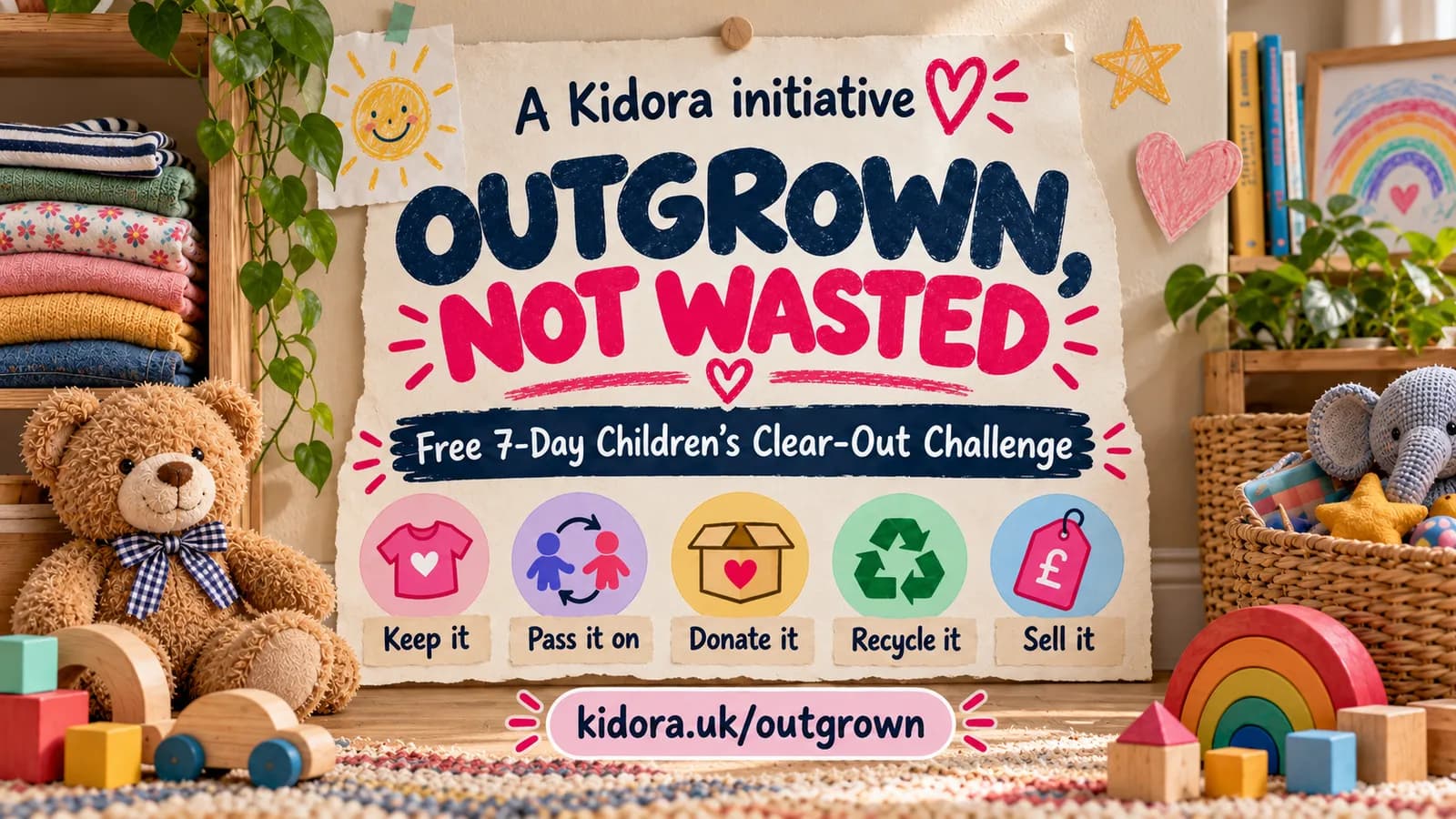
Kidora's free "Outgrown, Not Wasted" challenge has a straightforward suggestion for parents before Christmas: check what's already in your cupboards before adding more to the shopping list.
At the back of a child's wardrobe there might be a coat bought a little too big last winter, a forgotten set of building blocks or books that have slipped behind newer favourites. Elsewhere in the house there may be outgrown clothes, barely used baby equipment and toys still in perfectly good condition.
For families with growing children, it is a familiar contradiction: making room for what comes next while keeping hold of everything from the stage before. But looking through what is already there can be about more than tidying. It could prevent an unnecessary purchase, reveal something another family could use or recover a little money from suitable items that are no longer needed.
The shopping list should start at home
The first step is not to throw anything away. It is to work out what is already in the house.
Before buying another winter coat, check what still fits. Before ordering another toy, look for the one that has been pushed to the bottom of the box. Before spending money on books, bring the ones already on the shelf back into circulation.
A useful rule is to ask three questions: Does my child still use it? Will we realistically need it again? Could somebody else benefit from it now?
There is no saving in keeping an item indefinitely simply because it once cost money. Equally, there is little sense in paying to replace something that is already sitting unused in a cupboard.
Small decisions like these can help parents distinguish between things their family actually needs and things they have simply forgotten they own.
A week of small jobs, not one enormous clear-out
Outgrown, Not Wasted was created by Kidora, the UK family platform founded by North Wales mum-of-two Karolina Gudes.
Rather than expecting parents to empty every cupboard in a weekend, the challenge gives each day a manageable focus. Day one tackles clothes, followed by toys on day two and books on day three. Day four is for baby equipment, day five for shoes and accessories, and day six for larger items such as bikes, outdoor toys and furniture.
On day seven, families decide what should happen to everything they have found.
Some things should be kept, particularly clothes that will fit a younger sibling or items children still love. Others can be passed on to friends or relatives, donated to organisations accepting them, recycled responsibly or sold.
The aim is not to fill bin bags. It is to make a considered decision about each item rather than moving the same unsorted box from one cupboard to another.
Where the money savings can come from
A clear-out does not come with a guaranteed cash reward, but there are several ways it could help a household budget.
The first is avoiding repeat purchases. Finding a spare pair of wellies or rediscovering a board game may mean one less thing to buy.
The second is recovering some value from items that are no longer useful at home. A good-condition winter coat, a bundle of outgrown children's clothes or a complete toy set may interest another parent looking for a more affordable preloved option.
Selling does take time, so it helps to be realistic. Clean, well-lit photographs, honest descriptions and sensible prices can make listings more useful to buyers. Bundling lower-value items may be more practical than arranging several individual sales. And if an item is unlikely to sell, passing it on can be a better outcome than leaving it in a bag for months.
There is a third possibility too: when a child genuinely needs something, buying suitable preloved items rather than automatically purchasing new ones can stretch the family's budget further.
Karolina says:
The idea isn't to turn every cupboard into a sales opportunity. It's to make a little more room in family life and help parents see the value in things their children have finished with, whether that means keeping them, passing them on or selling them.
Make the final decision easier
One common reason a clear-out stalls is that everything ends up in a single pile marked 'sort later'.
Instead, give each item a destination as you go. Keep what is genuinely needed. Arrange a handover for things going to friends or family. Check donation requirements before travelling to a charity shop or baby bank. Use the correct local recycling route where reuse is not possible. If selling, set aside only items you have the time and confidence to list.
Children can help too. Choosing a few books or toys for another child to enjoy can make the process feel less like having possessions taken away and more like making room for the next chapter. Sentimental items deserve their own place; not everything needs to be judged by its resale value.
Safety matters more than a bargain
Not every used children's product is suitable to pass on. Before donating or selling toys and baby equipment, parents should check for damage, missing parts, age suitability, instructions and product recalls. Recalled or unsafe items should never be passed to another family.
Particular caution is needed with safety-critical baby equipment. UK government guidance advises against buying second-hand child car seats because accident damage may not be visible. If an item cannot be reused safely, responsible disposal is the better choice.
One small step before Christmas
Kidora combines a parent-to-parent marketplace for preloved baby and children's items with a Parent Hub and a Family Places directory of more than 6,500 UK attractions. But taking part in Outgrown, Not Wasted does not require anyone to register, buy or sell.
Families can start the challenge whenever it suits them. There is a free printable seven-day checklist, and schools, nurseries, PTAs and parent groups can share ready-made resources.
A less cluttered home may be a welcome result. The more useful outcome is knowing what your children already have, what they genuinely need and which outgrown belongings could still have a life beyond your front door.