A City Shaped By Ireland
Liverpool sits closer to Dublin than to London, and that geography has shaped everything about it. No English city carries a deeper Irish imprint, from the accent that rings through its streets to the cathedrals that crown its skyline. The connection stretches back more than eight centuries and remains vividly alive today.
The First Links
King John founded Liverpool in 1207 partly as a dispatch point for troops sent to Ireland during the Norman expansion. From its very origins, the town faced west across the Irish Sea rather than inland towards the rest of England. Trade with Ireland, the Isle of Man and coastal Wales sustained the settlement through centuries when it remained a small fishing and farming community of no more than a few hundred souls.
By the late sixteenth century, as the silting of the River Dee undermined Chester’s dominance, Liverpool began winning Irish trade. The port’s position on the Mersey Estuary, with deep water access to the Irish Sea, gave it a natural advantage that would prove transformative.
The Great Famine And Mass Migration
The most dramatic chapter in the Liverpool-Irish story began in the 1840s. When blight destroyed the potato crop across Ireland between 1845 and 1849, hundreds of thousands of desperate families fled across the Irish Sea. Liverpool, as the nearest major port, bore the full weight of this humanitarian catastrophe.
Almost 300,000 Irish people arrived in Liverpool in 1847 alone, many in appalling condition. Typhus and cholera swept through the overcrowded lodging houses near the docks. The city’s workhouses and fever wards overflowed. Yet despite the hardship, the vast majority of these arrivals stayed, and by 1851 approximately one quarter of Liverpool’s entire population had been born in Ireland.
This was not simply a temporary refuge. The Irish migrants settled permanently, building communities in the Vauxhall, Everton and Kirkdale districts close to the docks where the men found work as dockers, labourers and carters. The women entered domestic service, laundry work and the growing textile trades.
Scotland Road: The Heart Of Irish Liverpool
No street better embodies the Liverpool-Irish connection than Scotland Road. Created in the 1770s as a turnpike route to Preston, it became the spine of a thriving Irish-Catholic neighbourhood by the mid-nineteenth century. The streets branching off it, Gerard, Hunter, Lionel and Whale, were home to tight-knit communities centred on the parish church, the public house and the boxing gym.
At its peak, the Scotland Road area contained more than 200 pubs, dozens of Catholic churches and schools, and a fierce local identity that blended Irish traditions with the hard realities of dockland life. The community produced fighters, footballers, comedians and musicians who would carry its spirit into the wider world.
The area suffered badly from wartime bombing, post-war slum clearance and the construction of the Kingsway Tunnel in the 1960s and 1970s, which demolished large swathes of housing. Many families were relocated to new council estates in Kirkby, Croxteth and Norris Green, taking their Irish identity with them and spreading it across Merseyside. Today only one pub remains on Scotland Road, the Throstles Nest, which has stood since 1804 beside St Anthony’s Church.
A Unique Political Voice
Liverpool’s Irish community wielded remarkable political influence. The Liverpool Scotland constituency, centred on the Irish districts, elected T.P. O’Connor as its Member of Parliament in 1885. O’Connor, born in Athlone, County Westmeath in 1848, represented the seat for an extraordinary 44 years until his death in 1929, standing as a member of the Irish Parliamentary Party.
He remains the only politician from an Irish nationalist party ever elected to a constituency outside the island of Ireland. O’Connor was also a distinguished journalist who founded several newspapers and served as Father of the House of Commons in his later years. His successor, David Logan, continued the Irish-Catholic political tradition in the seat.
The Irish community’s political engagement extended beyond Westminster. Liverpool’s dock labour disputes, the Catholic defence associations, and the strong tradition of trade unionism in the city all bore the imprint of Irish communal organisation and solidarity.
Faith And The Two Cathedrals
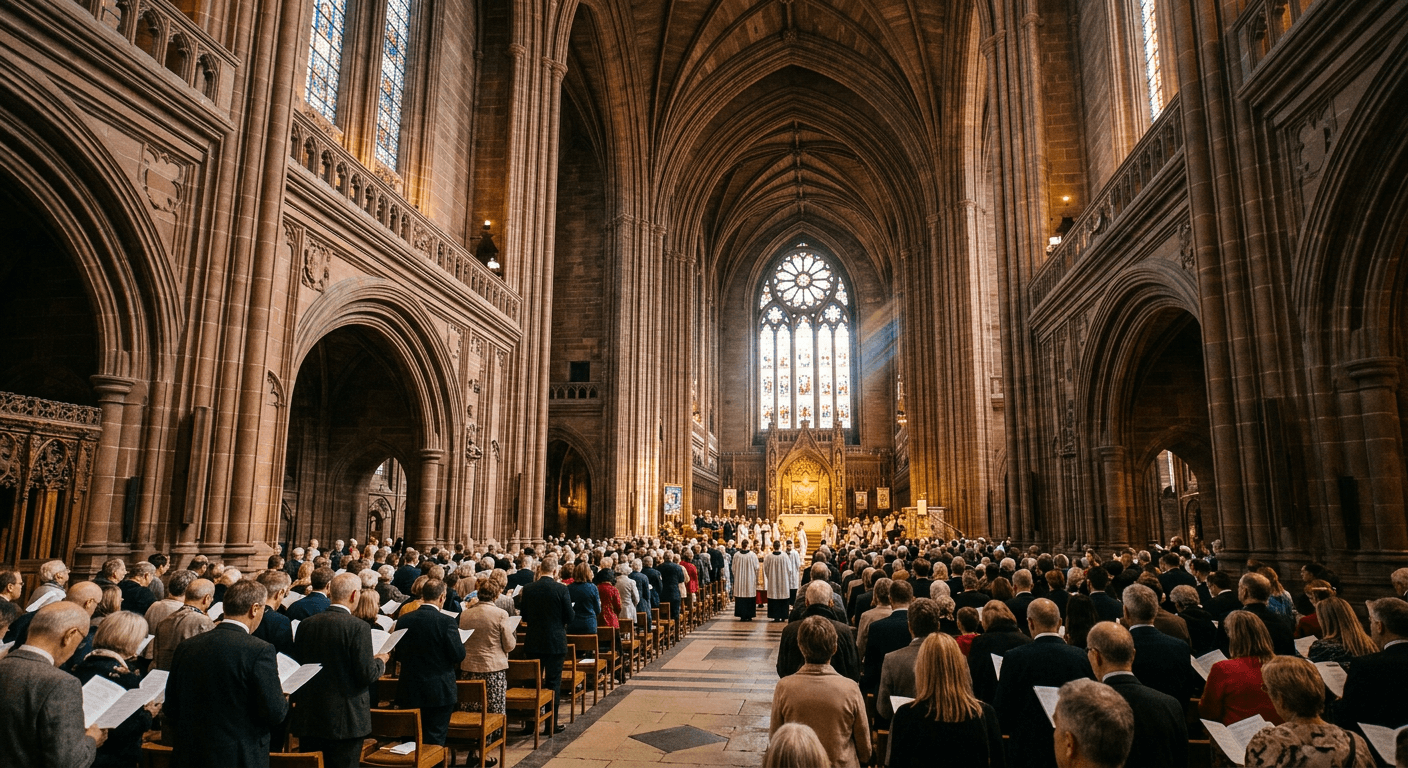
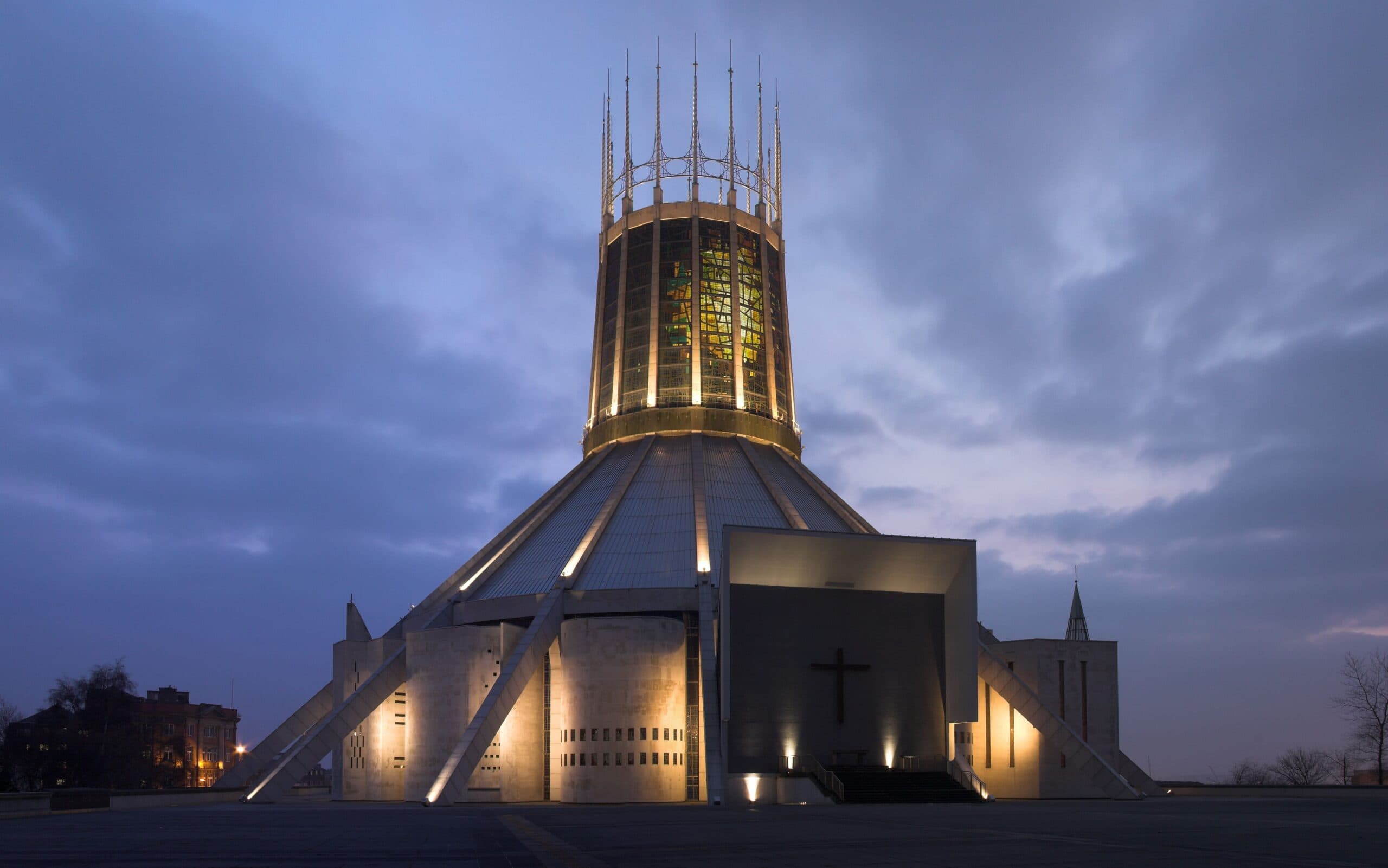
The mass Irish migration transformed Liverpool from a predominantly Protestant town into one of the most Catholic cities in England. The Roman Catholic Archdiocese of Liverpool grew to become the largest in the country, and the construction of the Metropolitan Cathedral of Christ the King, completed in 1967 and affectionately known as Paddy’s Wigwam, stands as a powerful symbol of Irish-Catholic identity on Merseyside.
The cathedral, designed by Sir Frederick Gibberd, occupies the site of the former Liverpool Workhouse on Brownlow Hill, where many Irish famine immigrants were once housed. Its striking modernist lantern tower is visible across the city, a beacon that echoes the cross-shaped plan and crown-like crown of the Anglican Cathedral further along Hope Street.
Together, the two cathedrals define Liverpool’s skyline and speak to the deep religious character of the city, a character shaped in large part by its Irish population.
The Scouse Accent: Ireland In Every Syllable
Linguists have traced the distinctive Scouse accent to the interaction of several languages and dialects, but the Irish influence is paramount. Before the mid-nineteenth century, the local accent was broadly Lancastrian. The mass arrival of Irish speakers, particularly from the Dublin area, combined with Welsh and Scandinavian influences, produced something entirely new.
The dental consonants in Scouse speech, the characteristic intonation patterns, and many grammatical constructions mirror Hiberno-English. Phrases such as “I’m after getting it” and “our kid” have clear Irish roots. The word “scouse” itself derives from “lobscouse”, a sailor’s stew related to the Norwegian “lapskaus”, reflecting the port’s maritime and Scandinavian connections.
The first reference to a distinctive Liverpool accent dates from 1890, by which time the Irish influence had thoroughly reshaped local speech. Today Scouse is one of the most recognisable accents in Britain and is consistently ranked among the friendliest.
Irish Heritage In Liverpool’s Music
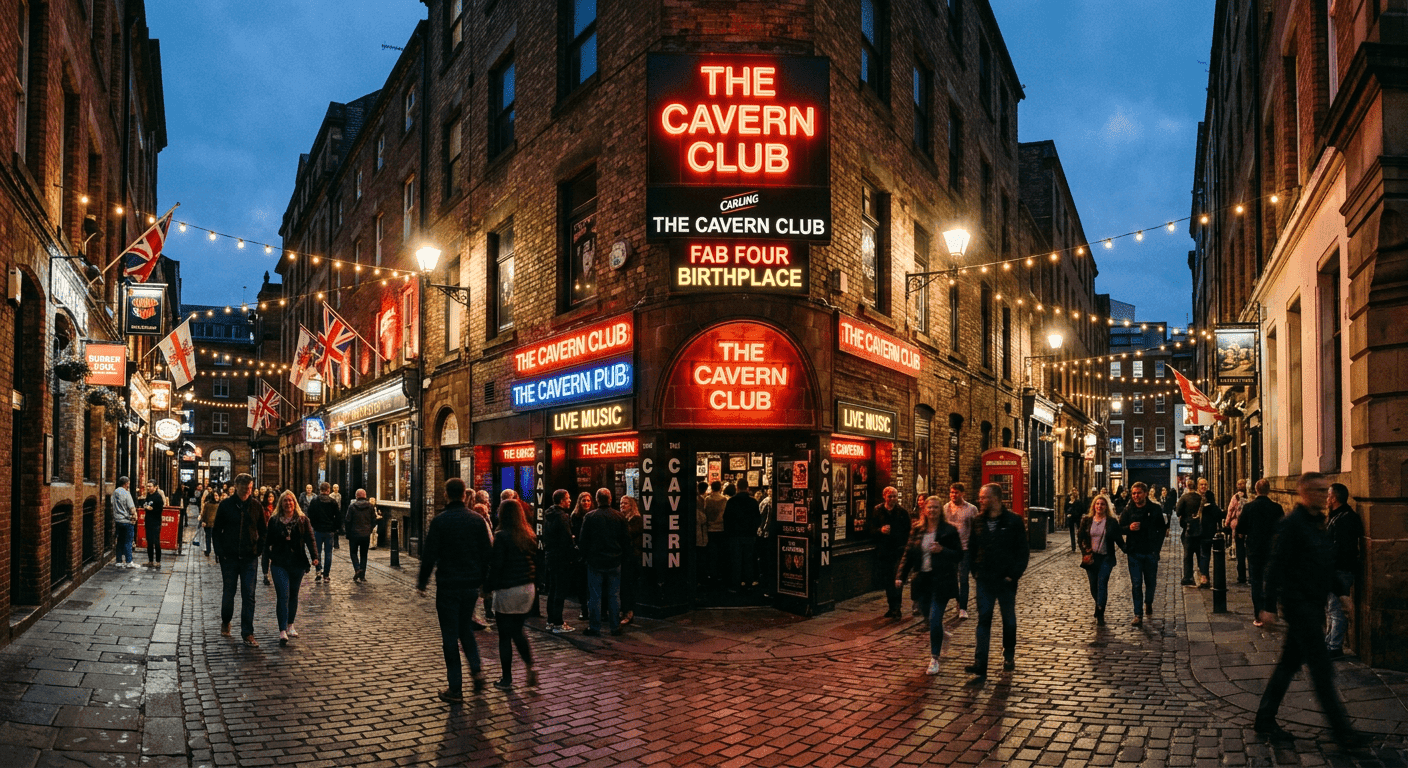
Liverpool’s musical genius, from the Merseybeat explosion of the 1960s to the present day, owes a significant debt to Irish tradition. The pub singalong culture, the ballad tradition, and the communal nature of music-making in working-class Irish households all fed directly into the city’s extraordinary popular music scene.
The Beatles, though not of direct Irish descent themselves, grew up in a city saturated with Irish musical culture. John Lennon’s family had Irish roots through his father’s side, and the blend of influences that produced Merseybeat was inseparable from the Irish presence in the city’s clubs, dance halls and backstreet pubs.
Cilla Black, born Priscilla Maria Veronica White in the Scotland Road area in 1943, came from a working-class Irish-Catholic family. Holly Johnson, who grew up to front Frankie Goes to Hollywood, also emerged from the same dockland Irish community. Gerry Marsden of Gerry and the Pacemakers, whose version of “You’ll Never Walk Alone” became the anthem of Liverpool Football Club, was raised in a family of Irish heritage.
Notable Irish-Liverpudlians
The list of Liverpudlians with Irish heritage reads like a roll call of the city’s cultural output. Tom Baker, the Fourth Doctor in Doctor Who, was born in Scotland Road in 1934 to an Irish-Catholic family. The comedian Jimmy Tarbuck, the actor and director Dexter Fletcher, and numerous boxers, football managers and community leaders all trace their roots to the Irish districts.
In sport, the connection is equally strong. Bill Shankly, the legendary Liverpool manager who transformed the club in the 1960s, was born in Glenbuck, Ayrshire, but the football culture he inherited and amplified on Merseyside was deeply intertwined with the city’s Irish working-class identity. Everton Football Club, founded in 1878, drew much of its early support from the Irish-Catholic communities of Everton and Kirkdale.
The Contemporary Connection
Today the Irish community in Liverpool continues to thrive, though its character has evolved. The Liverpool Irish Festival, held annually, celebrates the cultural connections through music, theatre, literature and visual art. The city maintains strong links with counties across the west of Ireland, particularly Donegal, Mayo, Sligo and Kerry, from which many of the original famine-era migrants came.
Irish language classes, Gaelic football clubs, traditional music sessions in pubs across the city, and annual St Patrick’s Day celebrations all attest to a living culture rather than a historical memory. The Irish passport office in Liverpool serves a community that remains formally connected to the Republic of Ireland, and many families maintain the tradition of dual identity, Liverpudlian and Irish in equal measure.
The 2021 census data does not separately identify Irish heritage, but estimates suggest that up to three-quarters of Liverpool’s population may have some Irish ancestry, making it, in demographic terms, one of the most Irish cities in the world outside Ireland itself.
A Bond That Endures
The Liverpool-Irish story is not simply one of immigration and assimilation. It is a story of two cultures meeting across a narrow sea and producing something new: a city whose voice, faith, humour and fighting spirit carry the unmistakable mark of Ireland. From the famine ships of the 1840s to the festival stages of the twenty-first century, that bond endures.