Scene-Setter: Liverpool, Late 1950s
Liverpool in the late 1950s was a city full of rhythm and restlessness. Still rebuilding after the war, it was a place where working people created their own entertainment and culture. With the docks humming and ships arriving from all over the world, the city’s youth had access to records and styles that few other towns in Britain could match. American rock ’n’ roll, rhythm and blues and the emerging sound of skiffle all found eager ears in back rooms, cafés and church halls.
The energy of this period shaped a new kind of music scene. Teenagers gathered wherever they could plug in a guitar, often forming groups overnight. The city’s cellars, pubs and parish halls became makeshift stages for bands trying to find their sound. These small venues gave Liverpool its beating musical heart and helped to nurture the young talent that would soon change popular music forever.
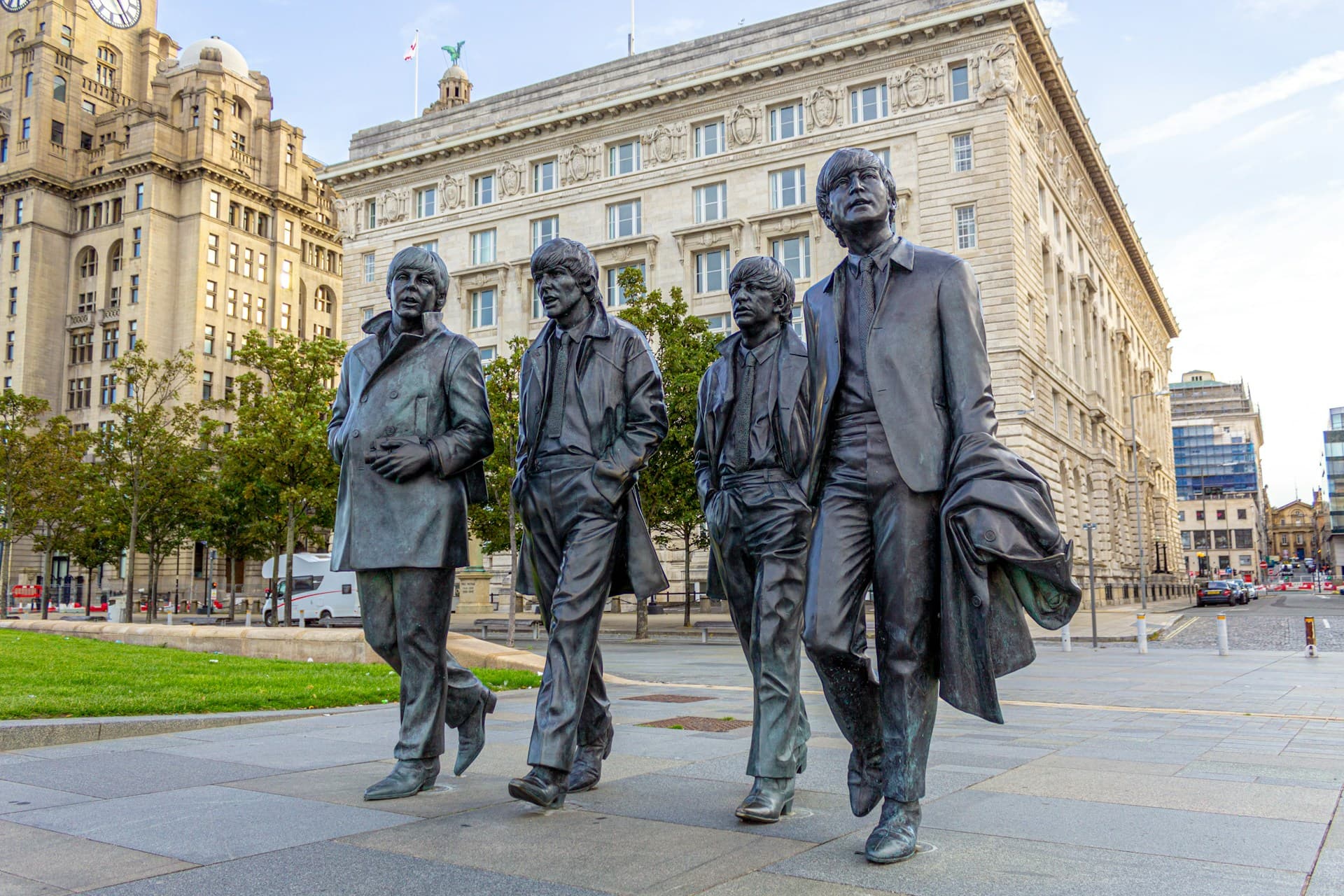
Into this lively backdrop came four lads from different parts of the city. Their paths crossed through chance, curiosity and a shared love of the same raw music coming off ships and radio waves. Before the world knew them as The Beatles, they were Liverpool boys absorbing the noise of a city that was itself tuning up for a cultural revolution.
Beginnings: Woolton, Speke, Dingle and Beyond
Every Beatle started as an ordinary Liverpool lad, shaped by the places they called home. John Lennon grew up in the tidy suburb of Woolton with his Aunt Mimi, where discipline met daydreams. Paul McCartney’s childhood in Speke and later Allerton was filled with the sound of his father’s piano and singalongs around the family table. George Harrison, from Wavertree, was the quiet boy with a sharp ear and a love for the guitar that never left him. Ringo Starr, born Richard Starkey, came from the Dingle, a tough but close-knit part of the city that taught him resilience long before fame ever did.
It was in these Liverpool neighbourhoods that music became a shared language. The skiffle craze, inspired by Lonnie Donegan, swept through schools and youth clubs. Old washboards, tea chests and battered guitars were enough to start a band. John’s first group, The Quarry Men, formed in 1956 with school friends and an enthusiasm that far outshone their skill.
Then came a summer afternoon in Woolton in 1957, when the Quarry Men played at St Peter’s Church fete. Paul McCartney turned up with his guitar, showed John a few chords and impressed him with how quickly he could tune a guitar and remember lyrics. That simple meeting changed everything. A friendship was struck that would soon lead to songs known across the world.
From then on, music began to shape their lives. Rehearsals took place in front rooms, kitchens and sometimes garden sheds. They swapped records, scribbled lyrics in school books and talked about new sounds coming from America. The Liverpool air seemed full of possibility. It was a city alive with ambition, and for these young musicians, it was the perfect place to start something extraordinary.
The Liverpool Circuit: A City of Stages
Before The Beatles became a global phenomenon, they were a local band grafting their way through the Liverpool gig scene. The city was bursting with venues, each with its own crowd and character. From church halls and youth clubs to smoky cellars, Liverpool gave them space to grow, experiment and find their rhythm.
The Cavern Club
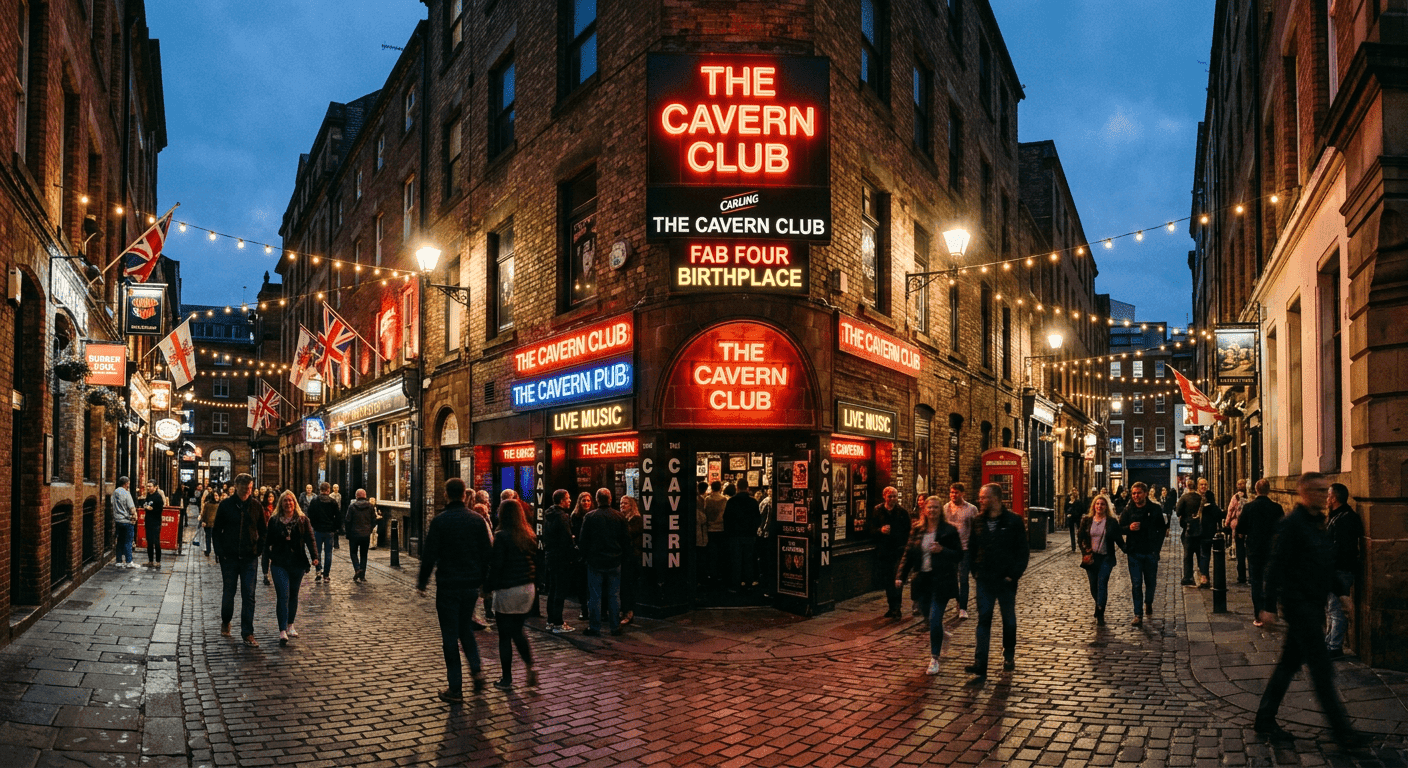
At the heart of it all was the Cavern Club on Mathew Street. Originally a jazz venue, it soon opened its doors to the beat groups that were taking over the city. The Beatles first played there in February 1961, still rough from their Hamburg stint but already sharper and louder than before. Their lunchtime sessions became legendary, drawing office workers, students and anyone curious to see what the noise was about. By the time they played their final Cavern show in August 1963, Beatlemania was already brewing.
Early Halls and Hidden Gems
Long before the Cavern, there were the rough-and-ready halls that shaped their sound. Litherland Town Hall is often called the place where The Beatles truly “arrived” in Liverpool. When they returned from Hamburg and took to that stage in December 1960, the crowd went wild. It was louder, faster and more exciting than anything the city had heard before. From that night onwards, they were the band everyone wanted to book.
Other spots across the city helped them build their reputation: the Iron Door Club and the Blue Angel for late-night sets, Aintree Institute for rowdy Saturday dances and the Jacaranda, where they gathered between shows to plan their next moves. Over the water, the Tower Ballroom in New Brighton and the Majestic in Birkenhead brought huge audiences who packed the floors to dance.
A City That Backed Its Own
Every corner of Liverpool seemed to have a story. There were posters on lampposts, handwritten set lists pinned to walls and teenagers waiting outside venues hoping to catch a glimpse of the lads carrying their gear in. These gigs were more than performances; they were social events that pulled communities together.
Liverpool’s stages gave The Beatles something few other bands had — a live testing ground where they could fail, learn and win people over one room at a time. By the time London and the rest of the world caught on, Liverpool had already witnessed the magic being built night after night.
Hamburg Detour, Liverpool Return
By 1960, The Beatles were good, but Hamburg made them great. When Liverpool promoter Allan Williams sent them to play in the rough clubs of Germany’s Reeperbahn, it was a gamble. They were still young, barely out of school, and suddenly performing seven hours a night in a city that never slept. The lights, noise and constant demand for energy turned them into a different kind of band.
Hamburg was wild. They played at places like the Indra Club, the Kaiserkeller and the Star-Club, sharing bills with other Liverpool acts such as Rory Storm and the Hurricanes. The crowds wanted rock ’n’ roll all night long, and the only way to survive was to keep up. Those endless hours gave The Beatles their tight sound and fierce stage presence. They learned to play to any audience, no matter how tough.
It was also in Hamburg that their line-up began to take shape. Stuart Sutcliffe joined on bass, bringing an art school flair that set them apart. Pete Best kept the beat on drums, and it was during this period that the group began to call themselves “The Beatles.” Friendships deepened, tempers flared and their confidence grew with every show.
When they returned to Liverpool at the end of 1960, they were no longer just another local group. The difference was clear the moment they took the stage at Litherland Town Hall that December. The crowd, used to polished dance bands, were stunned by the raw energy and volume. The Beatles looked sharper, played tighter and sounded like nothing anyone had heard before.
That homecoming gig marked a turning point. Word spread quickly across Liverpool that these lads had something special. The Hamburg experience had transformed them from amateurs into professionals, ready for whatever came next. And it all began, once again, right there in the city that had first given them a chance.
Managers, Makers and Mentors
Every great band needs the right people behind them, and for The Beatles, Liverpool provided that in abundance. By 1961, their name was buzzing through the city, but they still lacked structure. They were popular, talented and unpredictable, but what they needed was someone who could turn that energy into a future.
That person was Brian Epstein. A well-dressed young man running his family’s record store, NEMS, on Whitechapel, Epstein first heard about The Beatles from customers asking for a record they had not yet made. Curious, he went to see them at the Cavern Club in November 1961. The setting was far from glamorous — damp walls, sweat, and the constant thud of bass — but the charisma was undeniable. Within weeks, he became their manager, determined to take them beyond Liverpool’s cellar circuit.
Epstein gave the group focus and ambition. He encouraged them to polish their image, organise their set lists and think about the bigger picture. His belief in them never wavered, even when London record labels turned them away again and again. Without his steady guidance and faith, the band’s early chaos might never have found its course.
Behind the scenes, Liverpool had a network of mentors and allies who helped shape the band’s sound. Allan Williams, the self-styled “Man Who Gave The Beatles Away,” arranged their early gigs in Hamburg and opened the doors that toughened them up. Local journalists, such as those from Mersey Beat magazine, documented their rise and turned their gigs into headline stories. Fellow musicians like Cilla Black and Gerry Marsden shared stages and friendships, part of the same electric Merseybeat movement that made Liverpool the centre of British pop.
In many ways, Liverpool raised them twice — first as boys learning their craft, and again as professionals learning the business. The mentors, shop owners, promoters and fans all played their part in moving The Beatles from the Cavern to the charts. This was not just the story of four musicians, but of an entire city working together to change the sound of popular music forever.
Penny Lane, Strawberry Field and Real Places
For all their fame, The Beatles never truly left Liverpool behind. Even as the world opened up before them, the streets, parks and corners of their hometown kept finding their way into their songs. The city was more than a backdrop — it was part of their identity, woven into the music that defined a generation.
Penny Lane
“Penny Lane” is one of the clearest examples of how Liverpool lived within their lyrics. Written mainly by Paul McCartney, the song paints a picture of everyday life at the junction where Smithdown Road and Allerton Road meet. It was a place he and John Lennon passed often on the bus, heading into town from their suburban homes. The barber, the banker, the fireman — they were all drawn from real people and sights of 1960s Liverpool. Even now, visitors can stand at the famous street sign and imagine the bustle of that ordinary yet remarkable place that inspired one of pop’s most joyful songs.
Strawberry Field
Just a short walk from John Lennon’s childhood home lies Strawberry Field, once a Salvation Army children’s home surrounded by trees and gardens. As a boy, John would listen to the music from their summer fêtes and sometimes climb over the fence to join in. The place stayed with him, and years later, it became the setting for one of the band’s most haunting and personal songs, “Strawberry Fields Forever.” The song’s dreamy, uncertain tone mirrored Lennon’s reflections on memory and imagination — rooted firmly in Liverpool soil yet reaching into something universal.
Real Places, Real People
Other Liverpool landmarks appear throughout their story. “She’s Leaving Home” echoed the kind of family tensions familiar in the city’s working-class households. The childhood homes at Mendips and Forthlin Road, now preserved by the National Trust, tell stories of modest beginnings and quiet creativity. Even The Beatles’ early hangouts, from the Jacaranda café to the Empire Theatre, stand as reminders of how everyday places helped shape extraordinary art.
For fans today, these sites are more than tourist stops. They are living links between the band’s global legacy and the city that raised them. Each one carries its own rhythm — the laughter of young dreamers, the hum of buses along Penny Lane, the quiet reflection among the trees of Strawberry Field. Together, they form a map of inspiration that still beats in time with Liverpool itself.
The Breakout Years Told Through Liverpool
By the early 1960s, Liverpool could feel something changing. The Beatles had outgrown the cellar clubs and church halls that once held them. Their name was now spreading far beyond Merseyside, carried by fans, local radio and the pages of Mersey Beat magazine. Yet, through it all, the city remained their anchor — the stage on which they learned how to handle fame before it truly struck.
From Local Heroes to National Buzz
After Brian Epstein secured them an audition with EMI’s George Martin, things began to move quickly. Their first single, Love Me Do, released in October 1962, marked the start of a new chapter. It wasn’t just a hit; it was a signal that something different was coming from Liverpool. When Please Please Me followed, the band’s sound filled homes across Britain. Suddenly, the energy that had electrified the Cavern Club was being broadcast nationwide.
In Liverpool, pride turned into excitement. Crowds lined the streets outside venues, and the local press could barely keep up with the demand for stories. Cavern lunchtime sessions became harder to manage, with hundreds squeezed into the low-ceilinged cellar to see their hometown heroes. The Beatles were still playing for their neighbours, but the crowds were now screaming, not dancing.
The Last Cavern Years
Their connection to the Cavern Club lasted longer than anyone might have expected. Even as their fame spread, they returned for farewell performances. The most famous was on 3 August 1963 — their last time playing the small stage that had given them so much. By then, they had already topped the charts, but they still carried the same humour and warmth that had made them beloved in Liverpool from the start.
Liverpool Watches Beatlemania Begin
When The Beatles’ first album, Please Please Me, hit the charts, it wasn’t just a success for the band — it was a triumph for Liverpool. The city became known as the birthplace of a new sound, and other local acts quickly followed. The Merseybeat scene exploded, filling radio playlists and dance halls across the country.
Though The Beatles soon travelled the world, Liverpool never stopped cheering them on. For many who had seen them play in small halls, their rise felt personal. It proved that talent, determination and a bit of Liverpool grit could take you anywhere.
Those breakout years were about more than fame; they were about transformation. Four lads who once played for pocket change in local halls had now changed the sound of popular music forever. Yet, no matter how high they climbed, Liverpool remained their compass — the place that reminded them where it had all begun.
What Changed Because of Them
When The Beatles broke out of Liverpool, they didn’t just change the sound of popular music — they changed what people thought music could be. Their influence began in their hometown, but it rippled across Britain and soon across the world.
A City Transformed
Liverpool felt their success almost immediately. The city that had once been known for its ships and football teams was suddenly the centre of a global music revolution. Young people picked up guitars in every neighbourhood, inspired by the idea that if four lads from Liverpool could do it, maybe they could too. The Merseybeat movement took off, filling clubs with bands eager to follow in The Beatles’ footsteps. Venues multiplied, new promoters appeared, and local radio began giving more airtime to homegrown acts.
Tourism also changed forever. Fans from around the world began visiting Penny Lane, Strawberry Field and the Cavern Club, eager to trace the origins of the songs they loved. Even decades later, those places still draw crowds, and Liverpool’s identity as a music city remains central to its spirit.
Changing Music, Changing Minds
Musically, The Beatles rewrote the rules. Their early influences came from across the Atlantic — Elvis Presley, Chuck Berry, Little Richard, Buddy Holly and the rhythm and blues records brought into Liverpool by sailors. They studied these sounds, added their own humour and northern character, and built something entirely new. The mix of tight harmonies, clever lyrics and inventive melodies shaped modern pop and rock.
Their success encouraged musicians to experiment and take creative risks. Albums like Rubber Soul and Revolver expanded the boundaries of what a band could do in a studio. Later works, such as Sgt. Pepper’s Lonely Hearts Club Band, turned recording into art. The Beatles proved that popular music could be intelligent, imaginative and emotionally deep — not just entertainment, but culture.
Influence Beyond Music
Their impact reached far beyond sound. The Beatles changed fashion, language and youth culture. Their haircuts became a statement, their humour reflected the sharp wit of Liverpool, and their openness inspired a new sense of creativity and freedom in the 1960s. They made working-class accents and local pride something to celebrate.
More than half a century later, their influence still echoes through generations of artists. Every time a young band walks into a rehearsal room in Liverpool, or anywhere in the world, that spirit is there — bold, curious and unafraid to try something new.
The Beatles changed the world, but they began by changing Liverpool. The city shaped them, and in return, they reshaped the city’s story — forever linking its name with music, creativity and the power of possibility.
Beyond The Beatles: The Wider Liverpool Sound
The Beatles opened a door that never closed. When they left Liverpool for the world stage, they didn’t just take their own songs — they carried the sound of a city that would continue to inspire musicians for generations. Their success proved that creativity could thrive anywhere, even in a working port thousands of miles from London or New York. And Liverpool took that lesson to heart.
The Legacy That Sparked a Movement
After The Beatles, the Merseybeat wave rolled on. Bands such as Gerry and the Pacemakers, The Searchers and The Swinging Blue Jeans carried Liverpool’s name up the charts. Their music shared that same sense of melody and warmth, full of harmonies that echoed the city’s optimism. For a time, Liverpool wasn’t just another stop on the music map — it was the map.
As decades passed, each generation found its own voice but kept the same spirit. The 1980s brought Echo and the Bunnymen, The Teardrop Explodes and Frankie Goes to Hollywood. The 1990s saw The La’s and Cast revive guitar pop for a new era, while later came The Coral, The Zutons and The Wombats — all shaped, in some way, by the musical DNA The Beatles left behind. Even today, Liverpool’s live scene stays vibrant, from the small clubs of the Baltic Triangle to the big stages of the M&S Bank Arena.
A Living Heritage
Liverpool has turned its musical history into a living story. The rebuilt Cavern Club still fills with music every night, echoing the laughter and energy of those early days. The Beatles Story museum, the Magical Mystery Tour and the annual International Beatleweek all draw visitors who want to feel part of something timeless. But beneath the nostalgia, there’s real vitality. The city continues to support emerging artists, studios and festivals, keeping that creative current alive.
More Than Music
What The Beatles began was never just about fame. It was about belief — belief that a city known for its hard work and humour could also lead the world in imagination. Their songs told people that dreams were worth chasing, and Liverpool has carried that message ever since.
Walk through the city today and you can still hear it — the buskers on Mathew Street, the guitars ringing out from small pubs, the pride in people’s voices when they talk about “the lads.” It’s not nostalgia, but continuity. The story that started in Woolton and the Cavern still plays on, not as history frozen in time but as a rhythm that keeps moving forward.
Liverpool gave The Beatles their start, and The Beatles gave Liverpool a sound that will never fade. Together, they changed not just the course of music, but the way the world listens.
The Beatles’ Liverpool: Complete Gig Directory
Before the world tours and stadium crowds, The Beatles’ journey was written across the stages of Liverpool. Each gig, no matter how small or chaotic, added another line to their growing legend. The city became their testing ground — a place where they honed their sound, learned their craft and won over audiences one show at a time.
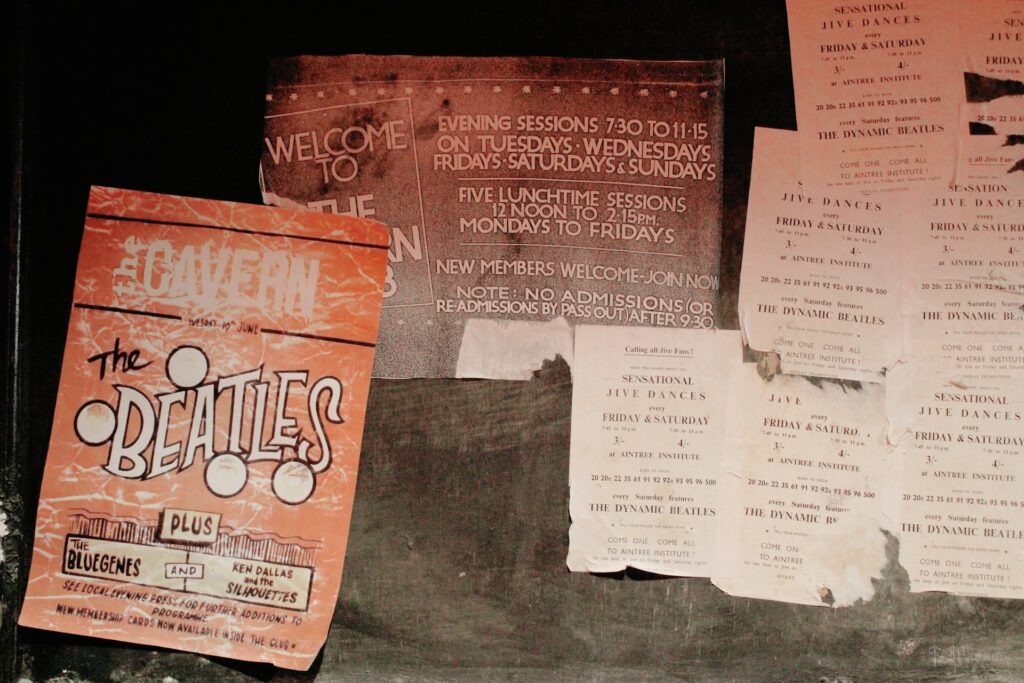
Early Days: Church Halls and Youth Clubs (1957–1959)
- St Peter’s Church Hall, Woolton (6 July 1957) – The Quarry Men perform at the summer fête where John Lennon meets Paul McCartney for the first time.
- Blair Hall, West Derby (1958) – Regular performances under The Quarry Men name, often for local dances and small fundraisers.
- Hambleton Hall, Huyton (1959) – Early appearances with shifting line-ups, featuring Lennon, McCartney and Harrison as their friendship solidifies through music.
Finding Their Feet: The Liverpool Dance Circuit (1960–1961)
- Litherland Town Hall (27 December 1960) – Their return from Hamburg transforms them into local heroes. Crowds erupt at their new, confident sound — often described as the birth of Beatlemania.
- Aintree Institute (1960–1961) – A favourite Saturday night spot known for its rowdy crowds. The band’s growing popularity sees queues around the block.
- Iron Door Club, Temple Street – Late-night sets that helped cement their reputation in Liverpool’s busy club scene.
- Jacaranda Club, Slater Street – A gathering place for musicians, run by Allan Williams. The Beatles rehearsed, relaxed and booked early work from here.
The Cavern Club Years (1961–1963)
- The Cavern Club, Mathew Street – The heart of the story. Between 1961 and 1963, The Beatles played nearly 300 times here, from early lunchtime sessions to their farewell show on 3 August 1963.
- Blue Angel Club – Popular with musicians and night owls; the band played here while still experimenting with their sound.
- Casbah Coffee Club, West Derby – Set up by Pete Best’s mother, Mona Best, it was another vital rehearsal and performance space during their earliest years.
Across the Mersey: Wider Liverpool and Wirral (1961–1963)
- Tower Ballroom, New Brighton – Large, lively crowds made this one of their most exciting local venues.
- Majestic Ballroom, Birkenhead – Regular spot for dance nights, offering a slightly glossier stage than the Cavern.
- Floral Pavilion, New Brighton – One of their more polished local performances as they began drawing national attention.
The Final Liverpool Performances (1963–1964)
- Empire Theatre, Lime Street – Their grandest Liverpool stage, symbolising how far they had come.
- Cavern Club (3 August 1963) – Their last official local show before Beatlemania took hold across the globe.
- Odeon Cinema, Liverpool (December 1963) – A return in triumph, greeted by fans who had supported them from the very start.
Legacy in Venues
Many of these spaces have changed or disappeared, but their echoes remain. Some, like the Cavern, have been lovingly rebuilt and still fill with music every night. Others live on through stories, photographs and the memories of those who were there. Each hall, cellar and ballroom tells part of the same story — a city that helped shape the most influential band in history.