Some artists arrive with polished press campaigns and carefully planned publicity. Others build momentum through word of mouth, spoken about in passing conversations that almost always end the same way: you really had to experience it for yourself.
“El Niño de la Pili” firmly belongs in the latter category.
Mario, the guy behind the hat, carries a geography that refuses to settle. Born in Reus, to an Andalusian family, shaped in Barcelona’s restless creative undercurrent, and increasingly woven into the cultural bloodstream of Liverpool, he doesn’t present himself as belonging to one scene so much as being formed in the tension between several. What emerges from that tension is not fusion in the commercial sense, but friction — languages pressing against each other, rhythms colliding, identities refusing to fully translate.
And in that unresolved space, his voice has found its shape.

Some people inherit a city. Others absorb it
There is something deliberately unforced in the way Mario speaks about Liverpool. No theatrical adoption of identity, no attempt to perform belonging. Instead, there is familiarity — the kind that only arrives through repetition, proximity, and enough lived time for a place to become instinctive rather than aspirational.
His spoken English carries a Scouse cadence that feels less learned than absorbed. Years of shared flats, long conversations, late nights where language stops behaving formally and becomes rhythm instead. The result is not imitation, but integration.
Liverpool, in his telling, is not an aesthetic influence. It is a behavioural one. A way of telling stories with humour as entry point and emotional directness as endpoint. A city where contradiction is allowed to exist without immediate explanation.
That sensibility now runs through his work.
Not visibly. Structurally.
Hootananny Brixton and the performance people still mention afterwards
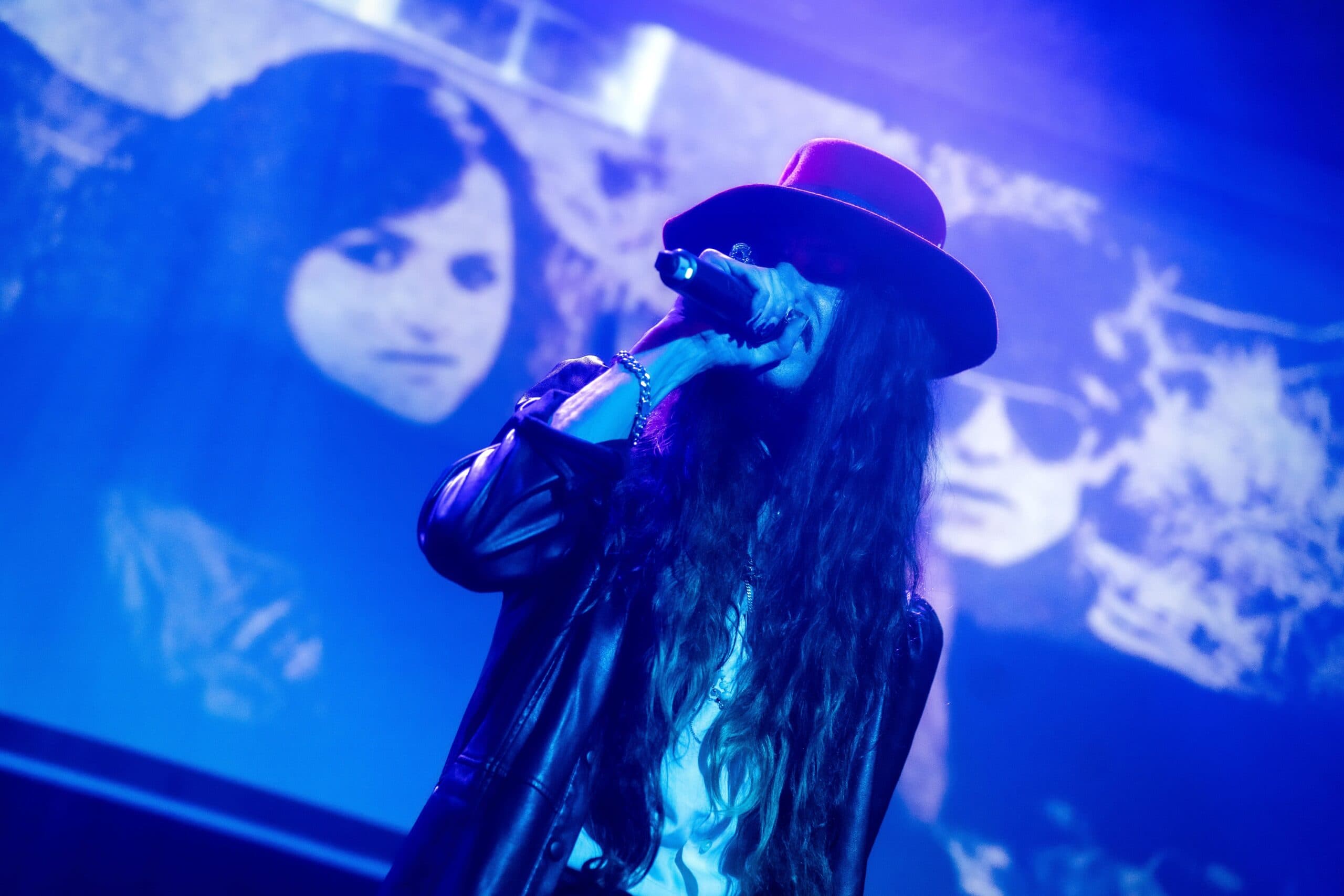
If there is a moment that quietly shifted attention towards El Niño de la Pili within UK underground circles, it was his appearance at Hootananny Brixton in London, where he became the first Spanish spoken word artist to perform at the venue.
At the time, it was not framed as a milestone. The room itself had little interest in labels or historical framing. What happened instead was more immediate: a performance that unsettled expectations without announcing itself as doing so.
People who were there still speak about it in unusually similar terms — not as a polished showcase, but as something that altered the atmosphere of the room. A set that remained deliberately exposed. No attempt at perfection. No attempt at resolution.
And perhaps that is precisely why it lingered.
Spoken word that behaves like something still breathing
On stage, El Niño de la Pili resists the conventional architecture of spoken word entirely. There is no clean division between poem, confession, rhythm or rupture. Everything overlaps, either by design or by emotional necessity.
His Spanish poetic foundation brings density, tension and emotional weight; his immersion in British underground performance culture brings restraint, timing, and a precise understanding of silence as structure rather than absence.
A line is never simply delivered. It is allowed to arrive fully. To sit in the room. To resist closure before the next one appears.
Pauses are not gaps in the performance — they are part of its grammar.
So is breath.
So is hesitation.
What emerges is not performance in the traditional sense, but something closer to presence under pressure: a room slowly reorganising itself around a voice that refuses to rush towards explanation.
Those who have seen him in smaller venues often describe the same shift taking place almost unconsciously. Conversations stop midway through. Phones disappear from tables. Attention sharpens.
The room begins listening differently.
The underground already knows the name
Before any of these upcoming dates, there is already a growing sense within UK independent circles that El Niño de la Pili is no longer functioning as an emerging curiosity, but as a name quietly settling into circulation.
That process has happened gradually rather than strategically. One performance leading to another. One conversation becoming another recommendation. One room leading to the next where somebody already seems to know the name before he arrives.
It is the same kind of slow recognition Liverpool has historically understood better than most cities — the kind that spreads through trust rather than marketing.
Not hype.
Memory.
A voice between places rather than fixed within them
What makes Mario difficult to categorise is not simply his multilingual background or geographical movement, but the way he treats identity as something deliberately unfinished. Not unstable, but open. Something that shifts depending on context without losing coherence.
He is not performing “Spanishness” or “Britishness” as separate registers. He operates in the unstable space between them, where meaning is constantly translating itself before it has time to settle completely.
That tension is where his spoken word lives.
And it is also where it gains its force.
Liverpool and the quiet recognition of something real
Liverpool has always possessed a particular instinct for artists who do not arrive fully explained. Not through formal introduction, but through repetition in conversation. Through names that begin reappearing after nights out, after basement shows, after moments that resist easy description but stay with people anyway.
El Niño de la Pili is beginning to enter that space.
Not as an outsider asking permission, nor as an artist attempting reinvention, but as a voice that already behaves as if it belongs within the city’s wider storytelling tradition.
And perhaps that is the most telling detail of all.
Because in a cultural landscape increasingly driven by immediacy, algorithms and forced visibility, there remains something powerful about the slow accumulation of attention — the kind that cannot be manufactured, only earned in rooms like these.
Rooms already waiting for him
The next step arrives at The Cluny in Newcastle on 4 June, a venue long associated with independent artists who rely on closeness rather than scale. Performance either connects there, or it doesn’t.
For Mario, the show does not feel positioned as a breakthrough moment or carefully managed arrival. It feels more consistent with the trajectory already forming around him — one built gradually through rooms, repetition, trust and word-of-mouth momentum rather than manufactured visibility.
Which is perhaps why it already feels significant before it has even happened.
Later in the month, he appears at Brighton Folklore Rooms on 27 June in a setting that carries an unusual but strangely fitting framing: a warm-up performance ahead of England vs Panama during the World Cup.
At first glance, spoken word and international football may seem culturally disconnected. In practice, the pairing makes complete sense within Mario’s world.
His performances tend to emerge around moments where collective emotion is already heightened — spaces charged with anticipation, movement, tension or release. Rather than competing with that atmosphere, his work redirects it. Slows it. Turns it inward for a moment.
In a summer likely to be saturated with noise and reaction, the performance feels almost counter-intuitive in the best possible way: a temporary pause before the volume rises again.
Because in cities like Liverpool, recognition rarely arrives loudly.
It accumulates quietly first.
And right now, El Niño de la Pili is beginning to accumulate everywhere.